
Bowling has been a cornerstone of American recreation for more than a century. From smoke-filled alleys packed with league bowlers to today’s family-friendly entertainment centers, the business of bowling has undergone dramatic transformations. Understanding how the industry has changed not only honors its rich history but also provides valuable lessons for center owners preparing for the future.
The Golden Age of Leagues
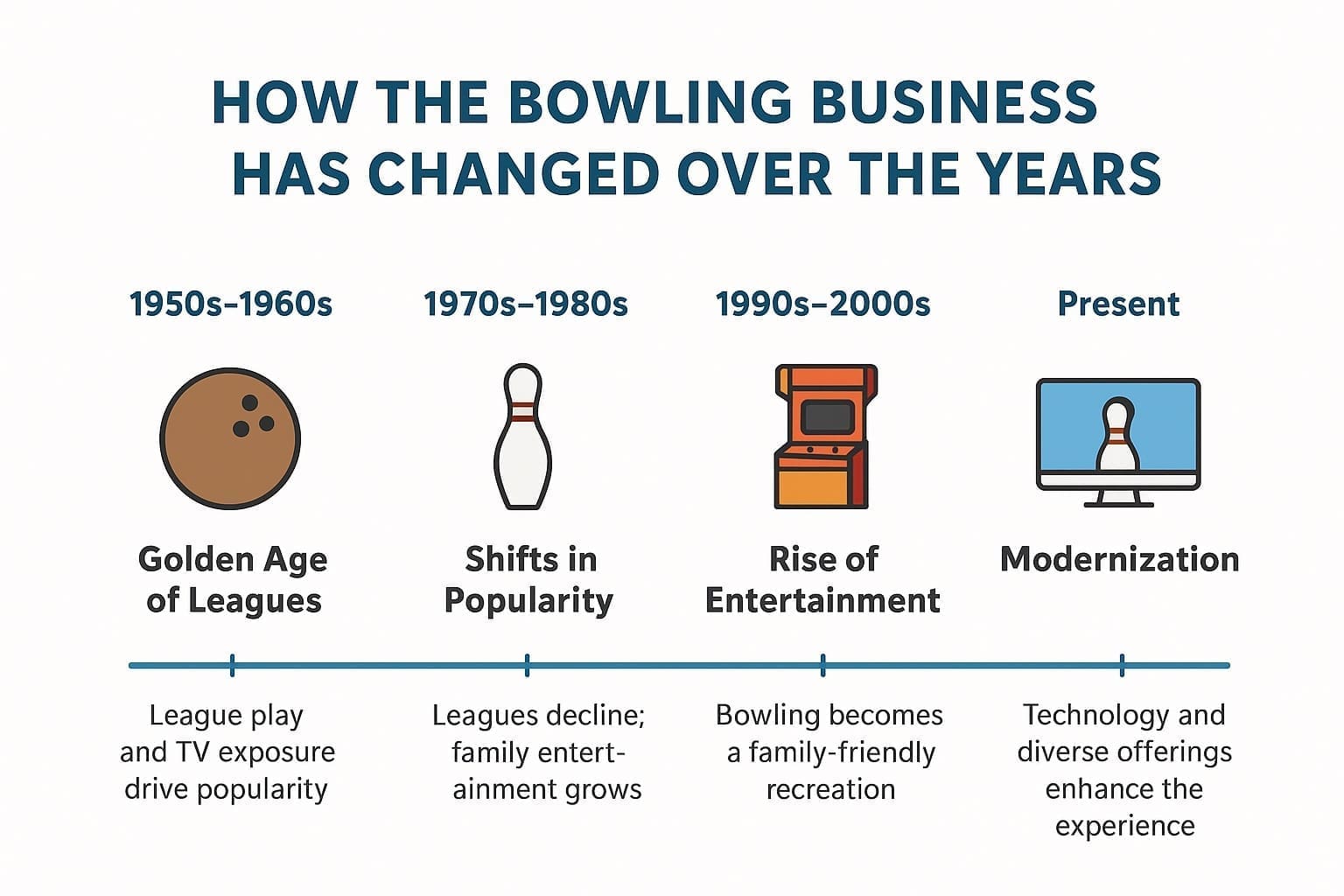
Bowling’s heyday began in the 1950s and 1960s, when it was one of America’s favorite pastimes. Television shows like “Bowling for Dollars” and the Professional Bowlers Association (PBA) brought the sport into living rooms nationwide.
During this era, leagues were the backbone of the bowling business. Most centers relied heavily on weekly league play, with men’s, women’s, and mixed teams filling lanes nearly every night. Many bowling alleys also included lounges and cocktail bars, making them lively neighborhood gathering spots.
Revenue models were straightforward: league dues, shoe rentals, food, and plenty of drinks. For decades, this formula worked exceptionally well.
Shifts in the 1980s and 1990s
By the 1980s, however, the industry began to see changes. While leagues remained strong, younger generations were less inclined to commit to weekly schedules. Family entertainment options expanded, and bowling faced increasing competition from movie theaters, arcades, and emerging home video game systems.
At the same time, maintenance costs for traditional wood lanes and older equipment rose. Many centers struggled to adapt, and league play gradually declined. Some proprietors closed their doors, while others began to experiment with new ideas.
The Rise of Bowling as Entertainment
In the late 1990s and early 2000s, bowling experienced a renaissance—but in a very different form. The concept of the “bowling entertainment center” (BEC) emerged. These were not the smoke-filled alleys of the past. Instead, they were clean, modern venues with laser lights, music videos, arcades, upscale food, and family-friendly environments.
This model helped bowling stay relevant by attracting casual players and families. Birthday parties, corporate events, and “cosmic bowling” nights became vital sources of revenue. The industry shifted from being primarily league-driven to focusing on entertainment and group experiences.
Technology Reshapes the Game
Technology has also played a major role in the evolution of bowling. Automatic scoring systems eliminated the need for manual scorekeeping, lowering the barrier for casual players.
More recently, interactive scoring, augmented reality features, and mobile apps have given bowling a modern twist. Players can choose themed scoreboards, track statistics, and even share results on social media. These innovations have made bowling more engaging for tech-savvy guests.
Additionally, synthetic lanes—like Murrey International’s MML-3000™ system—replaced wood lanes in many centers, reducing maintenance costs and providing consistent play conditions. Energy-efficient pinsetters, LED lighting, and automated bumpers further transformed operations.
Today’s Bowling Landscape
The modern bowling center is often more than just a place to bowl. Many venues now include full-service restaurants, sports bars, laser tag arenas, escape rooms, or virtual reality attractions. Bowling is still the anchor activity, but it’s part of a broader entertainment mix designed to keep guests engaged for hours.
Leagues still exist—especially competitive and short-season formats—but they are no longer the sole revenue driver. Instead, parties, events, and casual open play dominate.
Importantly, bowling has also embraced inclusivity. With lightweight balls, ramps, and bumper systems, the game is accessible to players of all ages and abilities, making it a true family activity.
Looking Ahead
As the bowling business continues to evolve, flexibility and innovation remain key. The centers thriving today are those that balance tradition with modern expectations—offering great lanes for serious bowlers while providing exciting experiences for casual visitors.
What hasn’t changed is bowling’s universal appeal. The simple joy of rolling a ball down the lane and knocking down pins still connects generations. By understanding how the industry has changed—and continues to adapt—bowling center operators can ensure that this timeless game remains part of the cultural fabric for decades to come.